Free 21-page sample
The man whose glance, it was said, could bring down a camel
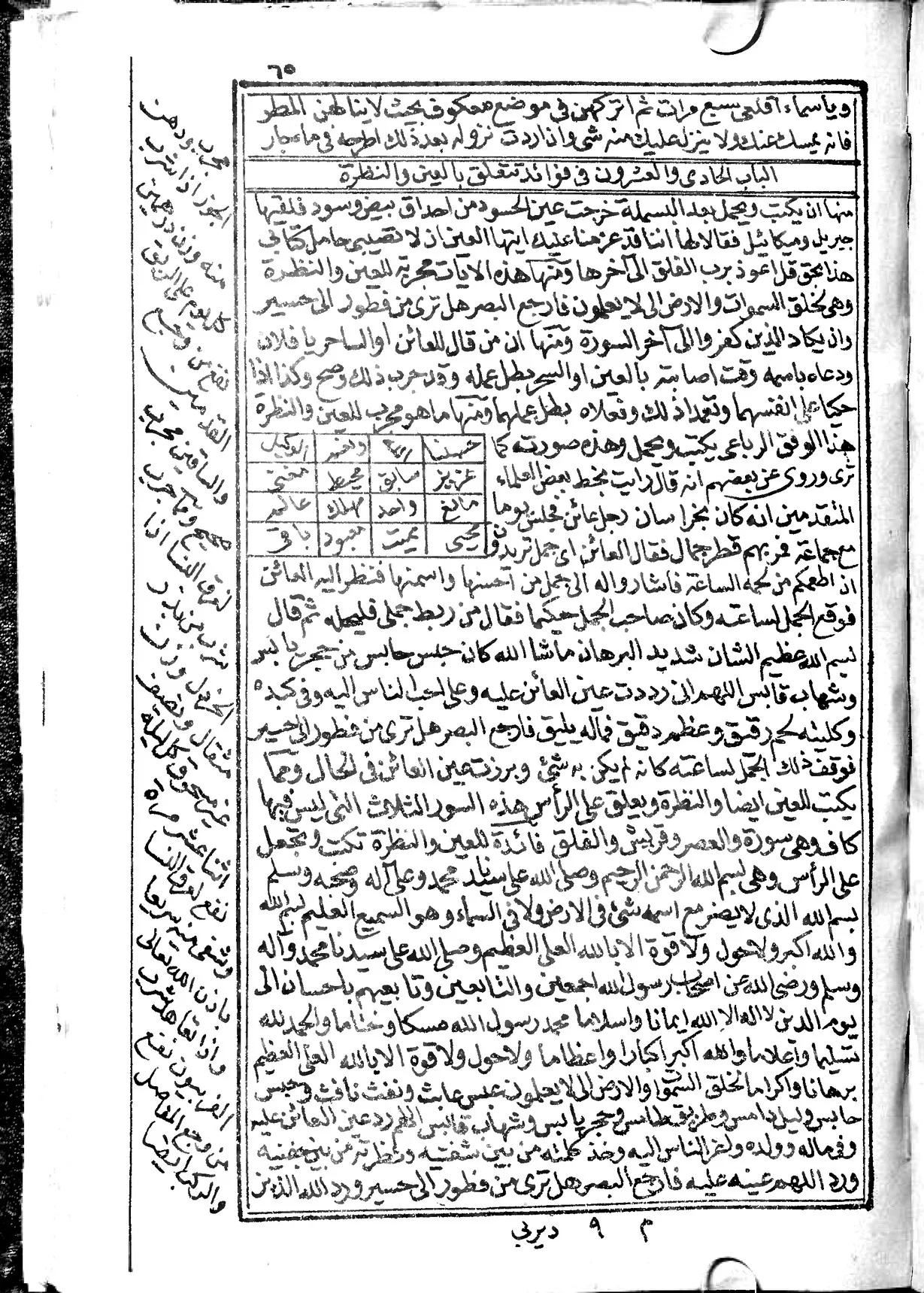
Roughly three centuries ago, a jurist at al-Azhar set his story down in a chapter on the evil eye. Read that chapter in full and free, with both lithograph pages reproduced in facsimile, and discover what the camel's owner did next.
There is no charge and no payment details are required. The PDF link appears here immediately, and a copy is sent to your inbox. You will then get two short emails about this book across the coming week, and only a few per year afterwards; reply with a single word to end them.
What the sample contains
Opening sections. The title pages, the complete contents, and the Translator's Foreword, which sets out who al-Dayrabī was, what led him to write the book, and the process behind this translation.
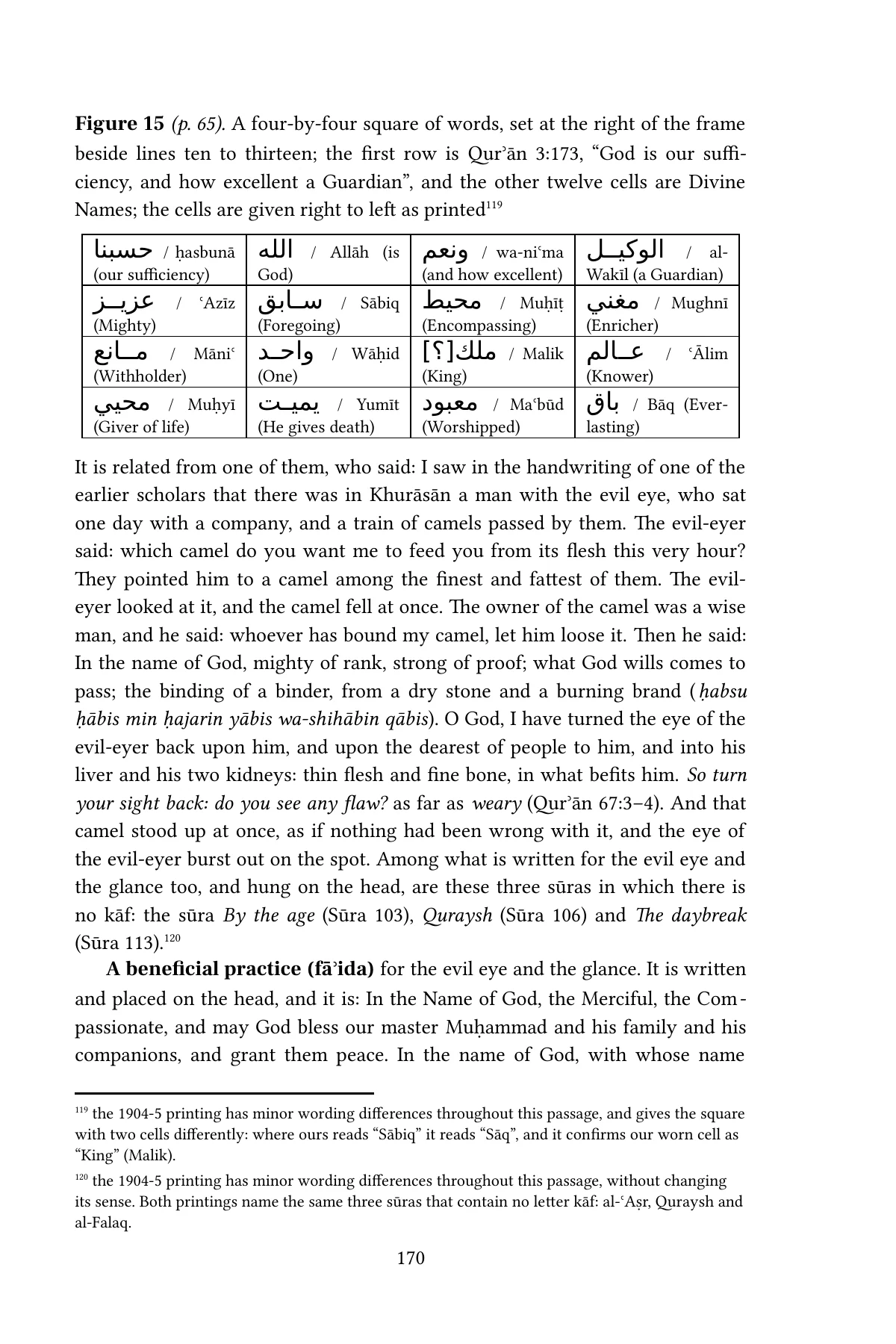
Chapter Twenty-one, in full. Al-Dayrabī's section on the evil eye and the glance (al-naẓra) covers charms that were written out and carried on the person, verses for recitation, and a story he came across in an earlier scholar's hand concerning a man in Khurāsān whose gaze was reputed to fell a camel.
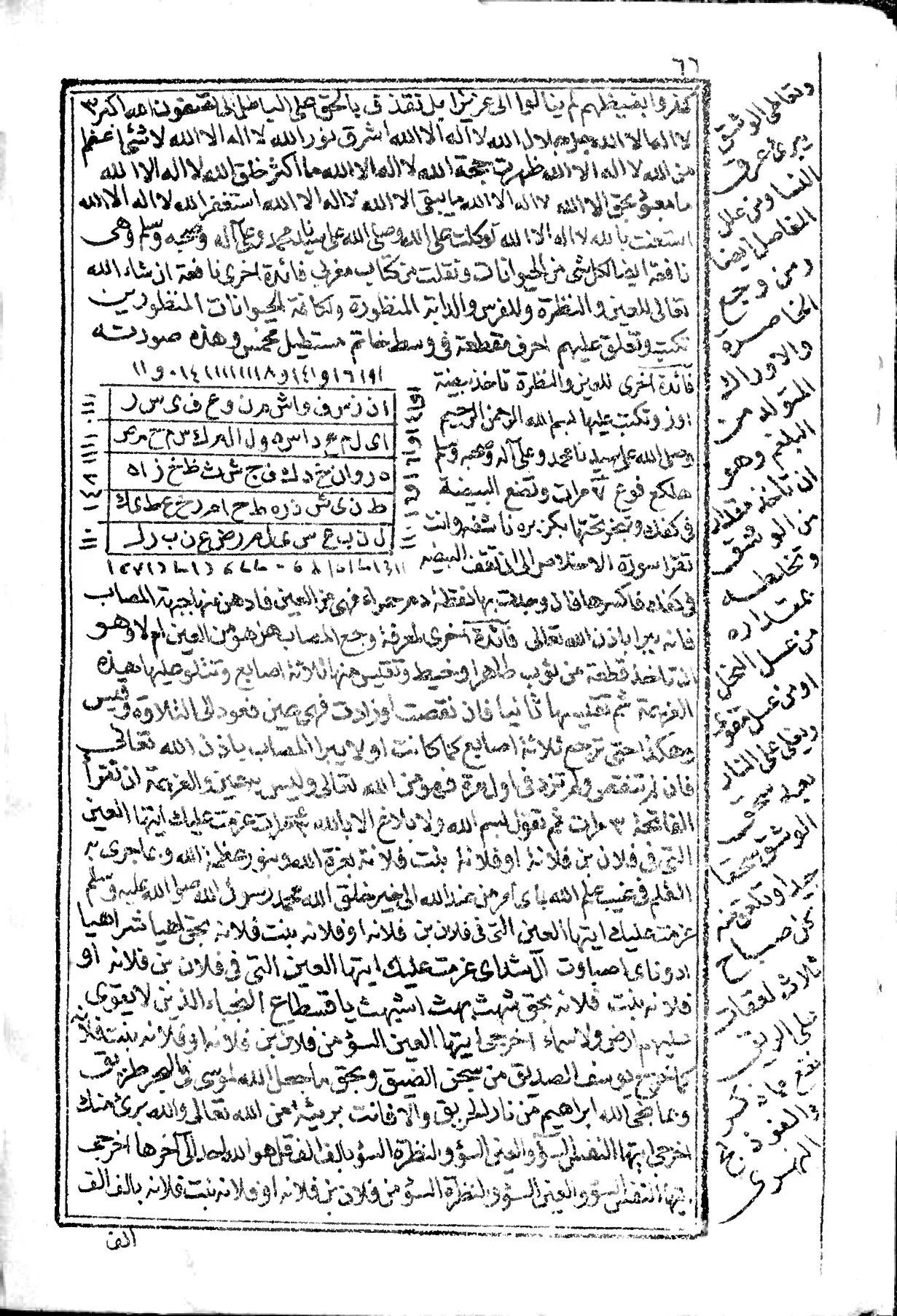
Two facsimile lithograph pages. The chapter's four-by-four word square, together with its five-row seal of unconnected letters, reproduced just as the Cairo edition prints them and then transcribed square by square.
The full volume comprises 36 chapters plus a conclusion, and its margins contain a further text, al-Sanūsī's Mujarrabāt, given here in complete translation.
How the pages appear
Each page of the lithograph containing a figure is reproduced twice in the volume: first as a facsimile, exactly as the Cairo printer laid it out, and then in transcription, allowing it to be read cell by cell. Any image can be enlarged with a click or a tap.
The author and the book
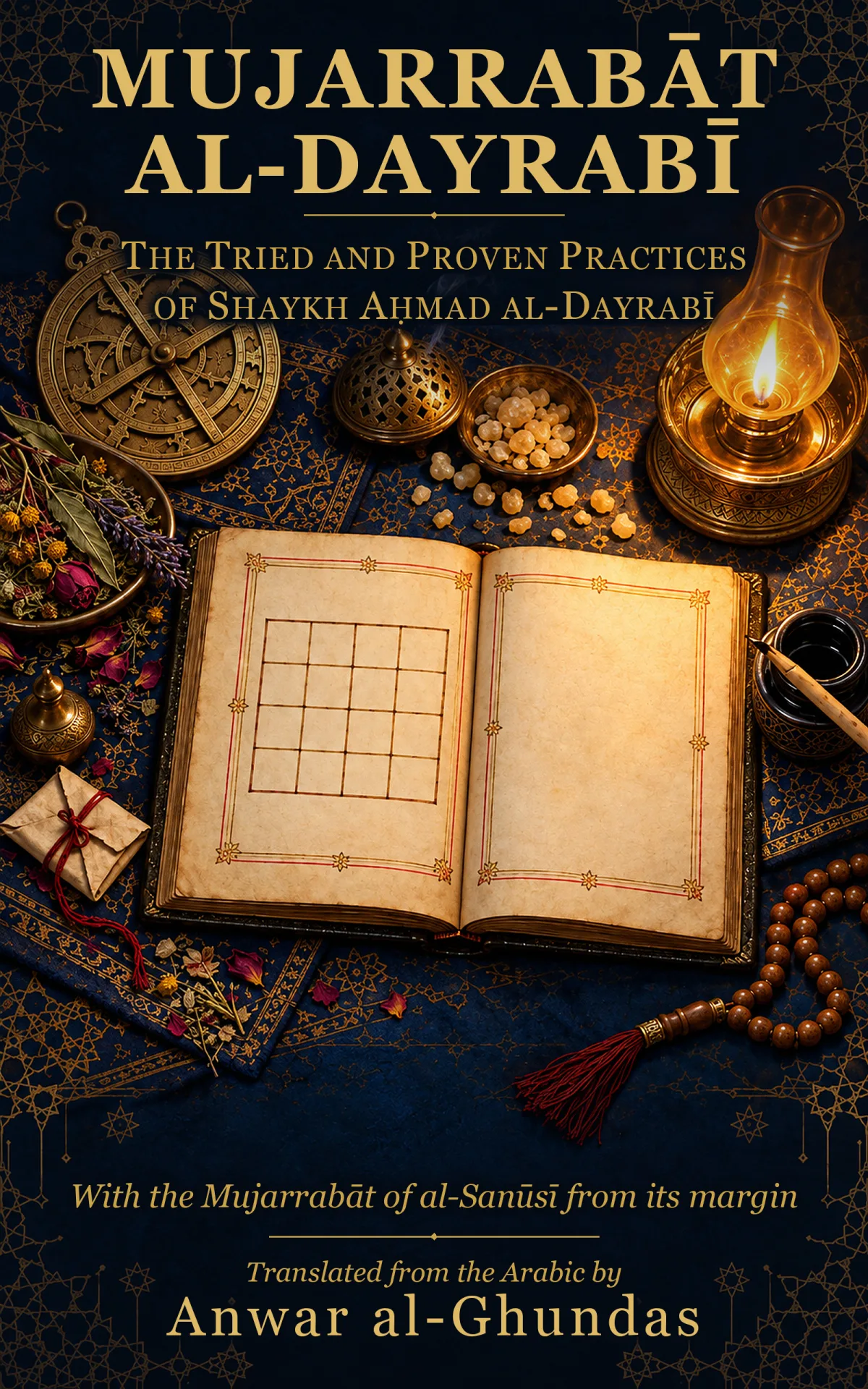
Aḥmad ibn ʿUmar al-Dayrabī, a Shāfiʿī jurist based at al-Azhar in Cairo, died in 1151 AH (1738 or 1739 CE). His Mujarrabāt, whose full title is Fatḥ al-Malik al-Majīd, has been reprinted in Cairo without interruption ever since. As far as we have been able to determine, no English edition has previously appeared. According to his own account, work on the text halted in 1123 AH, after sword fighting erupted within al-Azhar.
This is a historical document, and it is offered as such. Al-Dayrabī wrote in the voice of a believer and a legal scholar, addressing readers who inhabited the same world as he did. The customs he describes are rendered as he set them down, with neither dilution nor approval: they are the practices of eighteenth-century Cairo and appear here as history, not as instruction.
How the translation came about
The rendering, produced by Anwar al-Ghundas, came from a Cairo lithograph and was checked against three further copies, one of which is an eighteenth-century manuscript kept at Exeter. Each numeral was read twice, separately, directly from the page. Any page that bears a figure appears in facsimile, and wherever the print is defective a brief note records the fact rather than making a guess.
Translated using cutting-edge AI technology and edited by the publisher.
Read the chapter before you make up your mind.
Made up your mind already? The digital edition costs $9.99 in PDF and EPUB formats. It can also be found on Amazon, where the Kindle version is priced at $9.99 and the paperback at $24.99.