Free sample, 35 pages
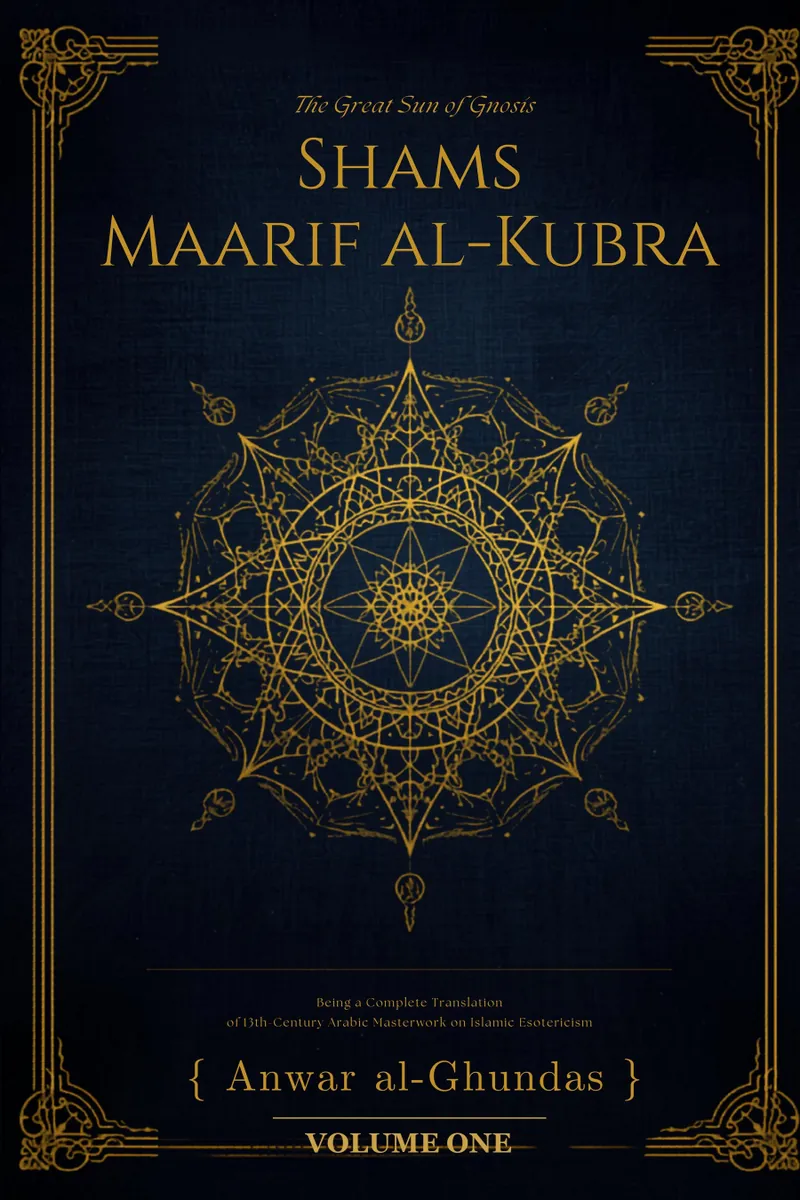
Read 35 pages of Shams al-Maʿārif at no cost, before deciding to buy.
The preface from the translator opens the volume, followed by the early pages of Part One, which explain the letters and their numerical values. A single magic square is then traced from the initial construction guidelines through to the completed illustration.
There is no charge and no payment information is required. As soon as you press the button, the PDF link appears on this page. Afterwards you will get only a few emails a year, letting you know about new titles, and a reply containing the word unsubscribe will put a stop to them.
What is in the sample
An introduction to the preface. It covers al-Būnī's identity, the edition on which this version is based, and the method used for the translation.
What each letter represents. In the opening pages of Part One, al-Būnī lists the twenty-eight letters, along with their numerical values and associated elements, using the same layout that appears in the final publication.
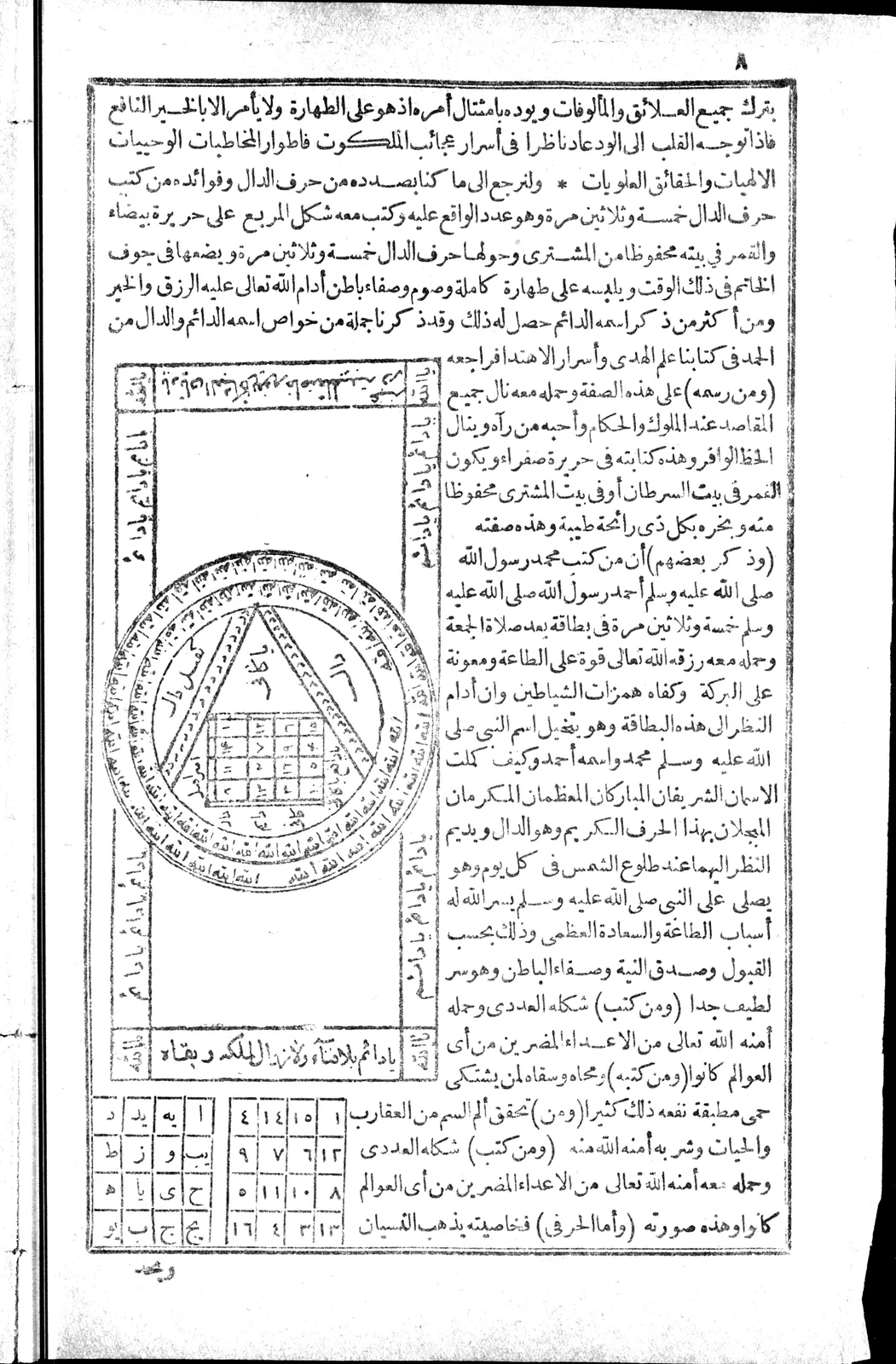
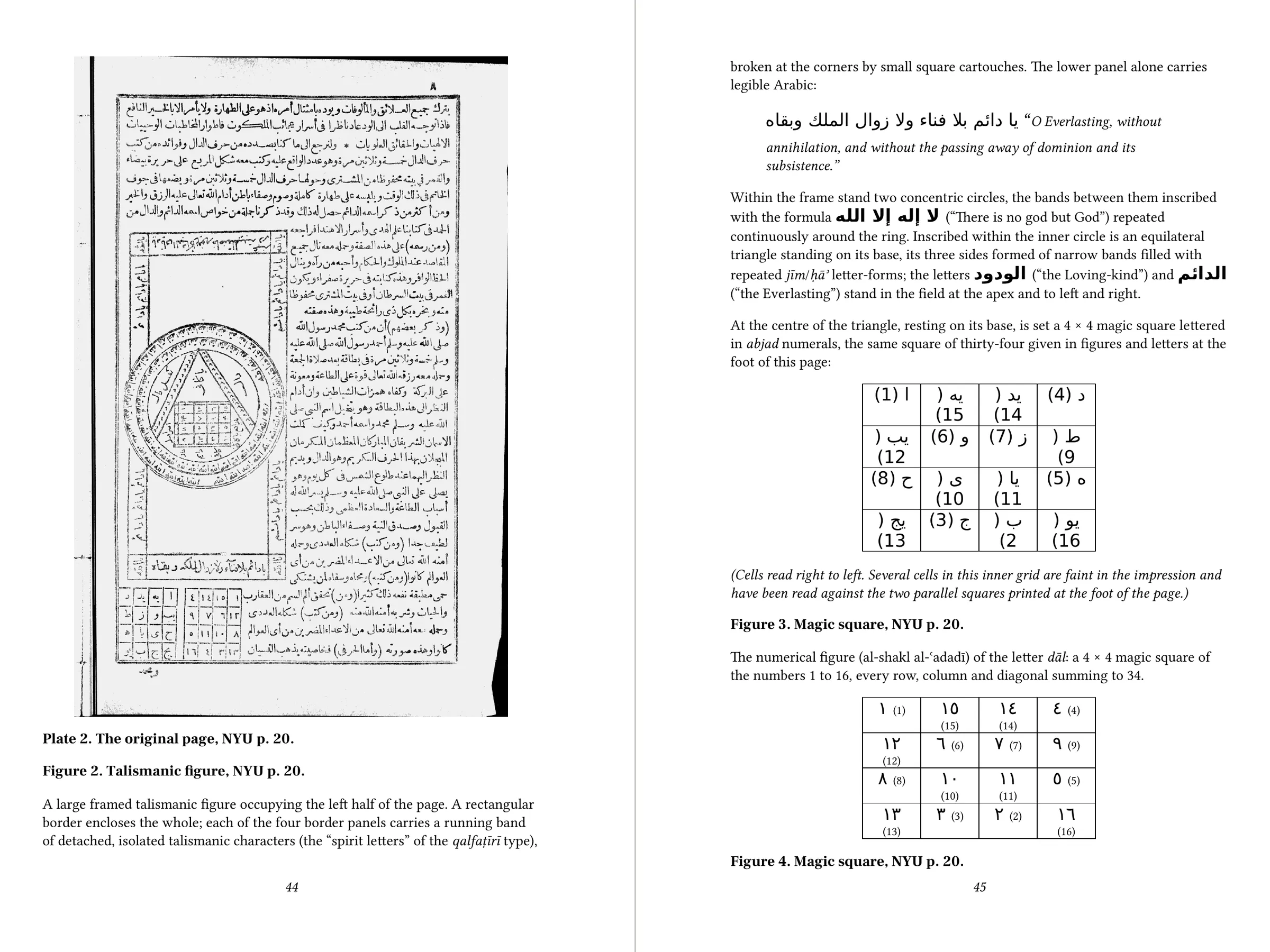
A single square, traced from start to finish. The magic square is followed from the construction rules through to the facsimile plate of the printed page, letting you assess the reproduction quality before making a purchase.
The complete edition includes 479 of these figures. The sample presents one in full.
What the pages look like
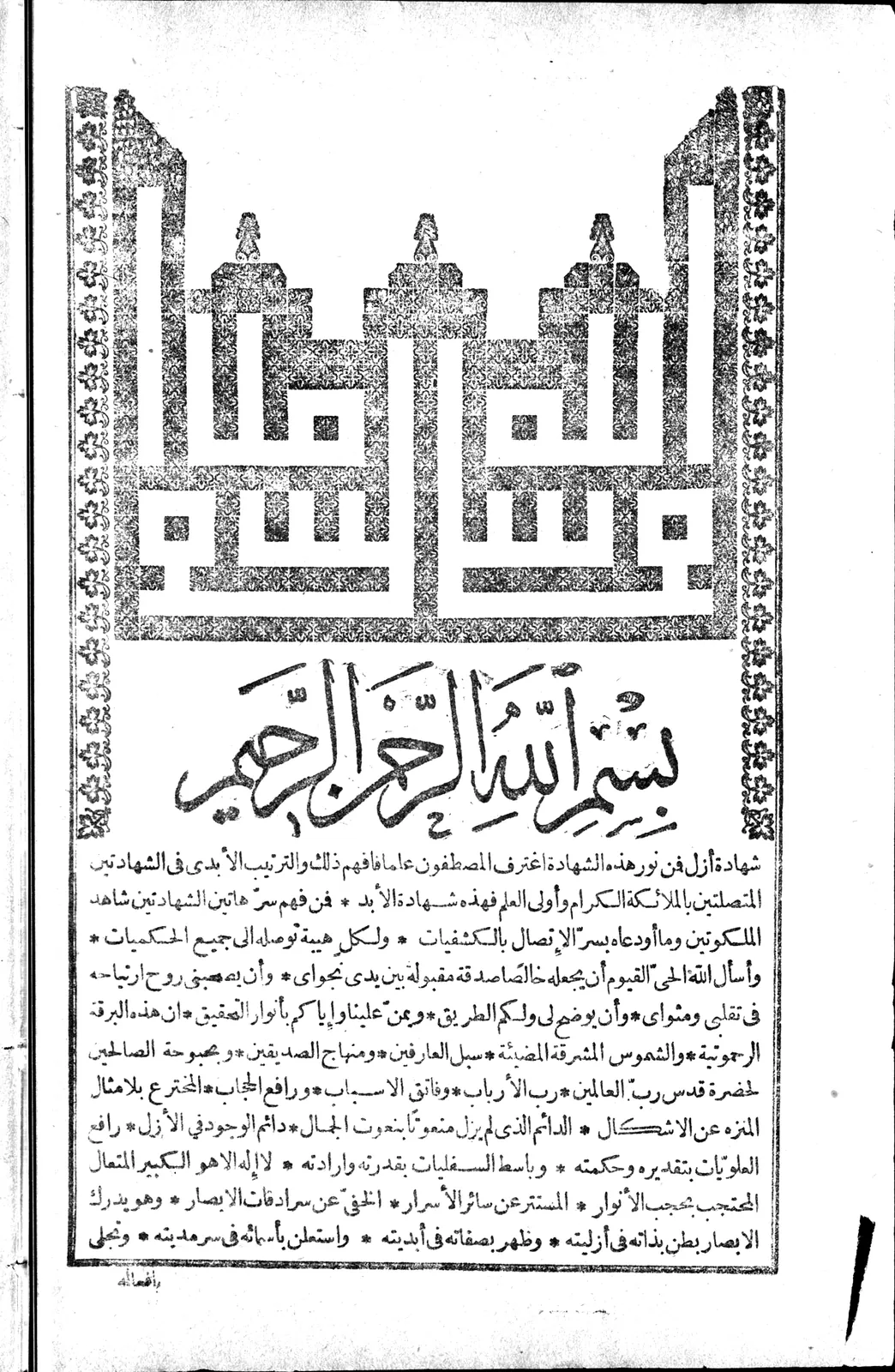
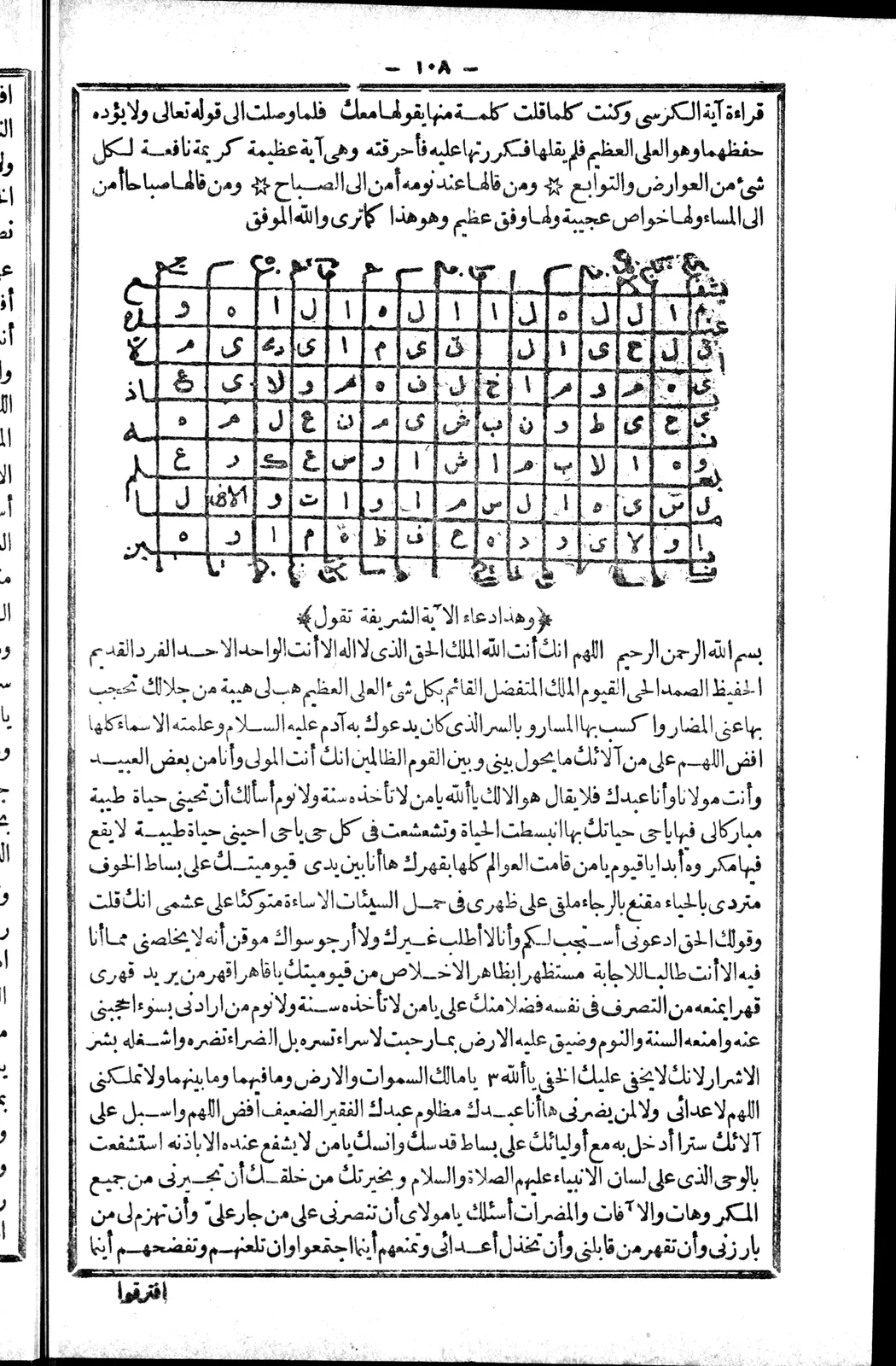
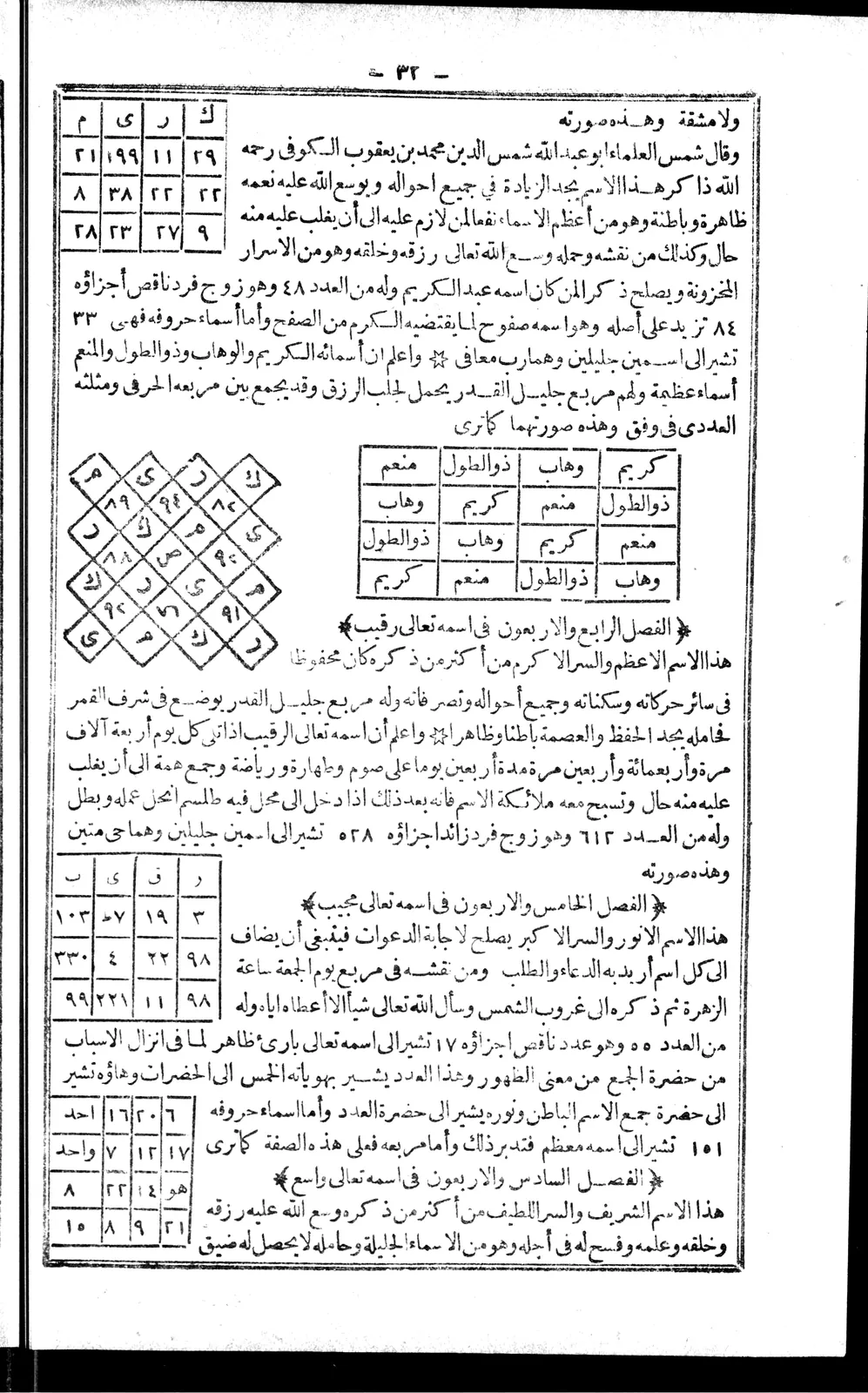
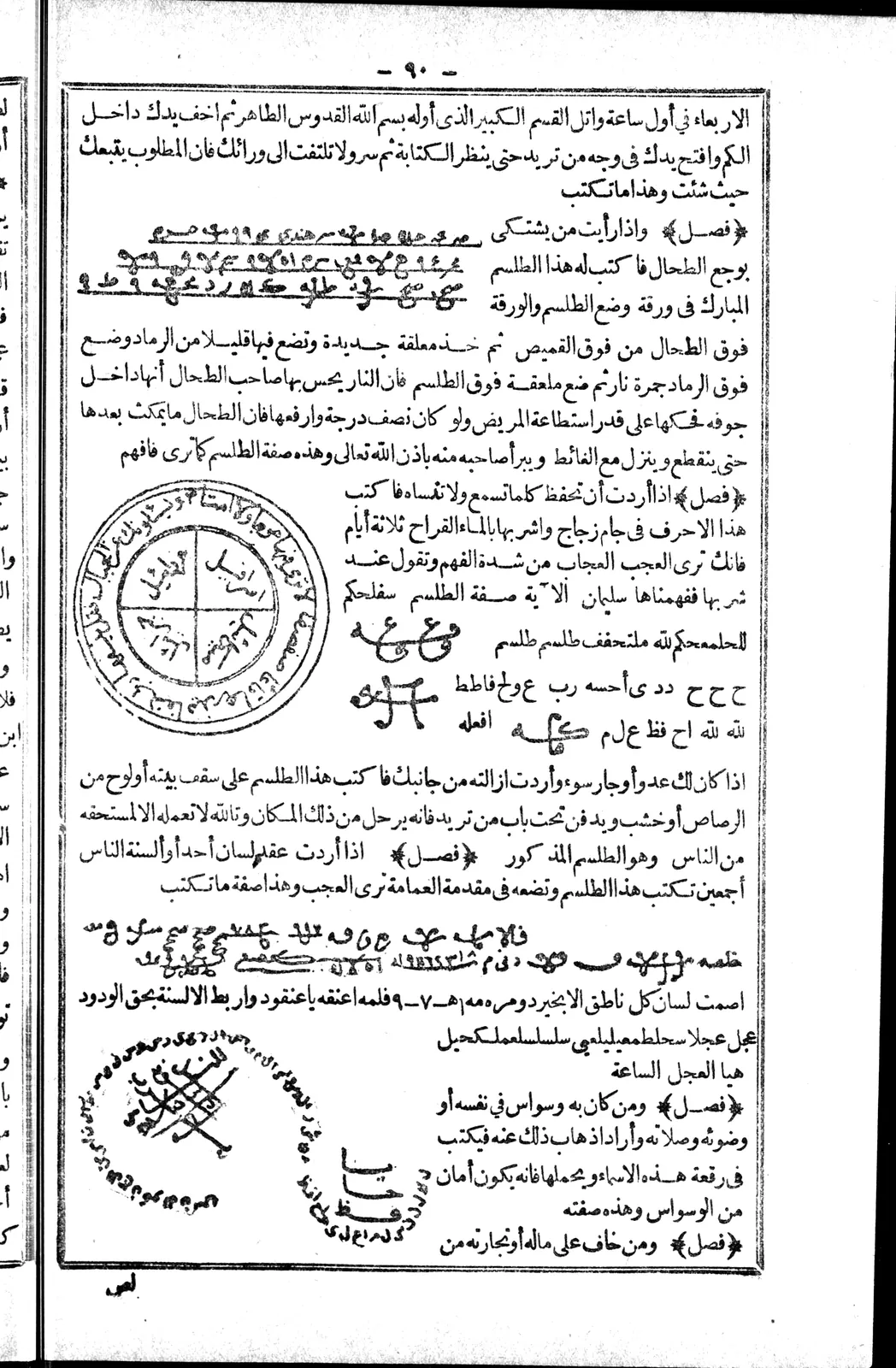
Each figure appears in the book on two occasions: first as a replica of the Cairo page, precisely as the typesetter produced it, and second as a transcription that allows you to examine it cell by cell. Click or tap any image to view a larger version.
How the translation was made
The English rendering was produced from the 546 scanned folios of the Cairo edition of 1347 AH (1928), issued by the Ḥusayniyya Egyptian Press, using the volume preserved at the American University of Beirut. The task was undertaken with sophisticated AI translation technology, which handles each printed Arabic page image individually. The publisher subsequently edited that material into the final version.
This is an aged print from the early part of the twentieth century. Across eighty-nine brief sections, the inking is damaged or light, leaving no definitive interpretation intact, which amounts to roughly one part in two thousand of a work exceeding 570,000 words. Every such instance is flagged at its exact location rather than concealed, and a reproduction of the original page appears alongside the English rendering, allowing the reader to observe precisely what the translator had before them.
The sample is what matters most. Try it, then make your choice.
Made up your mind already? The full work is available on Kindle for $12.99 from Amazon, or you can browse all editions and prices, among them the two-volume paperback and the PDF and EPUB at $12.99.